
Getting Around Ireland
(Car, Train, Bus & Transport Guide)
If you’re planning a trip to Ireland, one of the first questions you’ll likely ask is how to get around the country once you arrive. Ireland may be a relatively small island, but its winding rural roads, scattered villages, and dramatic coastal landscapes mean that getting from place to place isn’t always as simple as it looks on the map.
Many visitors assume renting a car is the only option, but there are several ways to travel around the country. From scenic train journeys and extensive bus networks to guided tours and city public transport, the best choice depends on your itinerary, comfort level with driving, and how much flexibility you want during your trip.
As someone who returns to Ireland regularly to explore new corners of the island (and revisit old favorites), I’ve traveled around the country using almost every method available. In this guide, I’ll walk you through the best ways of getting around Ireland, explain how transport in Ireland works for visitors, and help you decide which option will suit your trip best.
Whether you’re planning a Wild Atlantic Way road trip, relying on trains and buses between cities, or simply trying to navigate Dublin without a car, this guide will help you understand your options and choose the right way to travel around Ireland.
- What Is the Best Way to Get Around Ireland?
- Getting Around Ireland at a Glance
- Driving in Ireland
- Getting Around Ireland Without a Car
- Public Transport in Irish Cities
- Should You Rent a Car in Ireland?
- Transport Tips for First-Time Visitors to Ireland
- How to Plan Your Route Around Ireland
- How Long Does It Take to Travel Around Ireland by Car?
- Frequently Asked Questions About Getting Around Ireland
- Final Thoughts on Getting Around Ireland
What Is the Best Way to Get Around Ireland?
This quick guide shows the main ways visitors travel around Ireland, from renting a car for scenic road trips to using trains, buses, and public transport in cities.
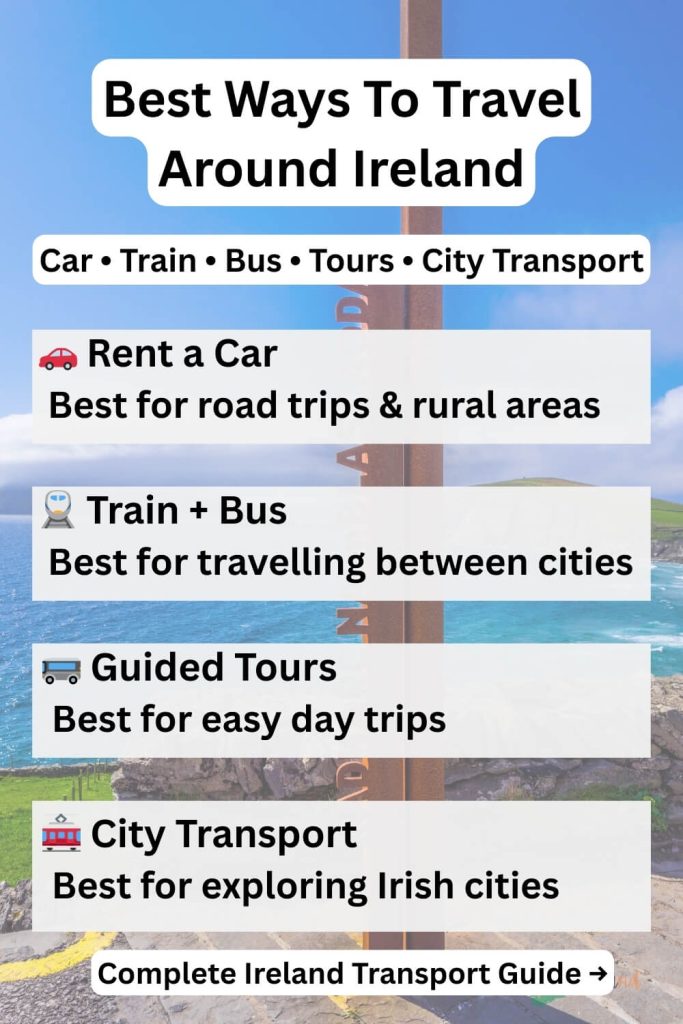
For most visitors, renting a car is the best way to get around Ireland. It gives you the freedom to explore rural areas, scenic coastal routes, and smaller villages that are difficult to reach by public transport.
However, driving isn’t the only option. Ireland also has a reliable network of trains and buses connecting major cities and towns, and guided tours make it easy to visit popular destinations without worrying about navigation.
The best option depends on your travel style:
Rent a car if you want:
- Freedom to explore rural areas and hidden gems
- To drive scenic routes like the Wild Atlantic Way
- Flexibility with your itinerary
Use trains and buses if you want:
- To travel between major cities like Dublin, Galway, and Cork
- To avoid driving on narrow rural roads
- A more relaxed way to travel
Choose guided tours if you want:
- Day trips from Dublin
- A stress-free way to see major sights
- Local guides and commentary along the way
Use public transport when staying in cities
If you’re spending time in the capital, see my full guide on how to get around Dublin.
Getting Around Ireland at a Glance
If you’re trying to decide the best way to travel around Ireland, it helps to see the main options side by side. While many visitors choose to rent a car for the flexibility it offers, Ireland also has trains, long-distance buses, local city transport, and organised tours that can work well depending on your itinerary.
The right choice usually comes down to three things: how much of the country you want to see, whether you’re comfortable driving, and how flexible you want your schedule to be.
Here’s a quick comparison of the most common ways of getting around Ireland.
| Transport Method | Best For | Pros | Cons |
| Rental Car | Road trips, rural areas, scenic routes | Maximum flexibility, access to small towns and coastal drives, ideal for multi-day itineraries | Driving on the left, narrow rural roads, parking challenges in cities |
| Train | Traveling between major cities | Comfortable, scenic in places, easy to use, avoids traffic | Limited routes outside major cities, doesn’t reach many rural attractions |
| Long-Distance Bus | Budget travel and reaching smaller towns | Extensive network, affordable, can reach places trains don’t but not all | Slower journeys, fixed schedules, can require connections |
| Guided Tours | Short trips or day trips from cities | Stress-free, no driving required, expert guides | Less flexibility, fixed itineraries, can feel rushed |
| City Public Transport | Getting around major cities | Affordable and convenient, good coverage in cities like Dublin | Limited usefulness outside urban areas |
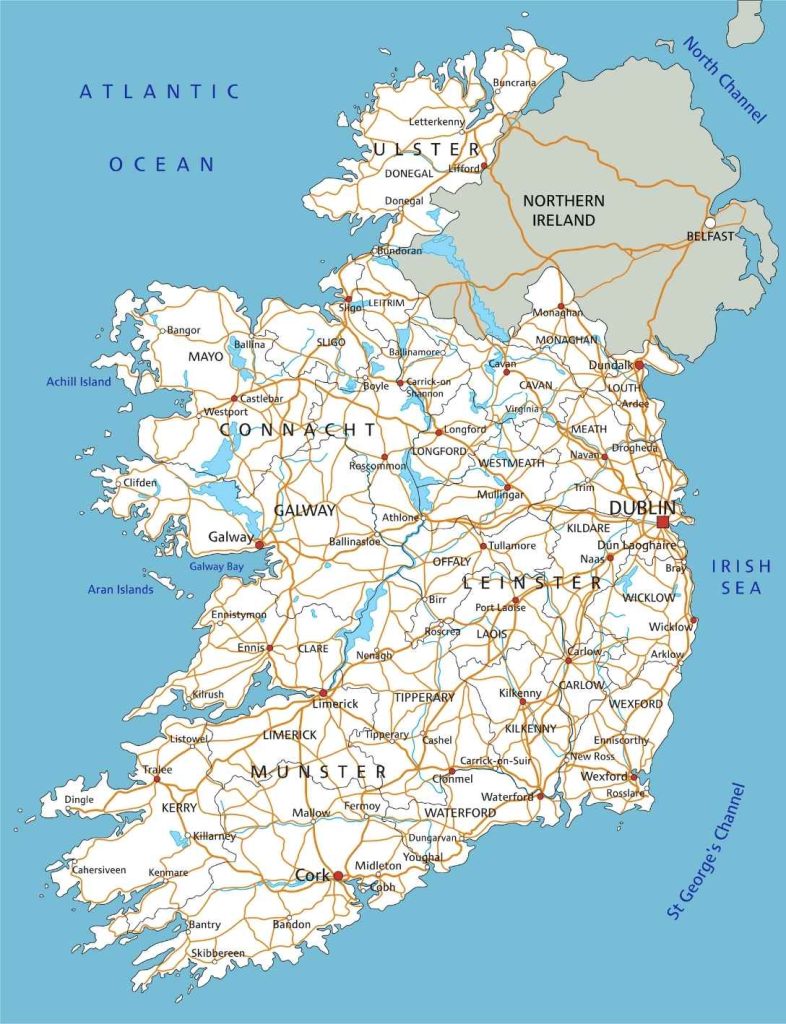
For many travellers, the best approach is often a combination of transport methods. For example, you might rely on public transport while exploring Dublin, then rent a car for a few days to travel along the Wild Atlantic Way or visit rural counties.
If you’re planning a classic Irish road trip that includes scenic coastal routes, national parks, and smaller villages, renting a car usually provides the most flexibility. But if you’re focusing mainly on major cities or prefer not to drive, trains and buses can still make it possible to see many of Ireland’s highlights.
Driving in Ireland
For many visitors, driving is the easiest and most flexible way to get around Ireland, particularly if you plan to explore rural regions and scenic coastal routes. While public transport connects major cities and towns, many of the country’s most beautiful landscapes, coastal routes, and historic sites are located in rural areas where buses and trains are limited, if available at all.
Renting a car allows you to explore Ireland at your own pace. You can stop in small villages, pull over at scenic viewpoints, and take spontaneous detours that simply aren’t possible when following fixed transport schedules. This freedom is one of the reasons so many travelers choose to drive, particularly if they plan to explore regions such as the Wild Atlantic Way or Ireland’s national parks.
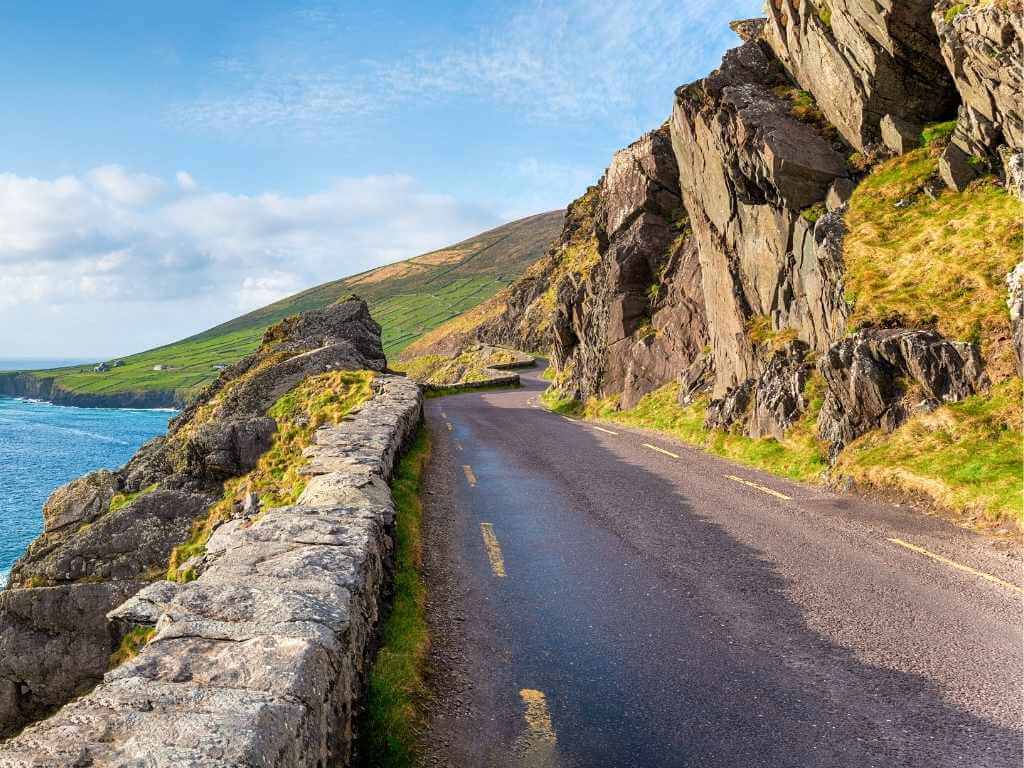
Also, many visitors can be surprised by just how rural Irish roads can be off the main national roads and motorways. This is particularly true along the west coast where roads can narrow into country lanes with stone walls on both sides and even farm animal crossings.
That said, driving in Ireland can feel very different from driving in other countries. Visitors need to adjust to driving on the left-hand side of the road, and rural roads in particular can be narrow and winding, as mentioned. With a little preparation, however, most travelers find that driving in Ireland quickly becomes comfortable and manageable.
If you’re considering renting a car during your trip, it’s helpful to understand where driving works best, where it can be challenging, and what to expect before you get behind the wheel.
Why Renting a Car Is the Most Popular Option
Ireland’s landscapes are one of the main reasons people visit the country, and many of the most memorable places are located outside the main cities. Scenic peninsulas, coastal cliffs, small fishing villages, and historic ruins are often scattered across rural areas that are difficult to reach using public transport alone.
Having a car makes it much easier to reach these places. Instead of relying on bus timetables or guided tours, you can explore at your own pace and spend as much time as you like at each stop.
Driving also works particularly well if you are planning a road trip itinerary. Routes such as the Wild Atlantic Way, the Ring of Kerry, or the Causeway Coastal Route are designed to be explored by car, with countless scenic viewpoints and short detours along the way.
For families or small groups traveling together, renting a car can also be surprisingly cost-effective. When transport costs are shared between several people, it often ends up being comparable to or even cheaper than multiple train or bus tickets.
Where Driving Is Easiest
Driving in Ireland tends to be easiest in rural areas and along major routes between cities. Motorways and national roads connecting places like Dublin, Galway, Cork, and Limerick are generally well maintained and clearly signposted.
Many of Ireland’s famous scenic routes are also relatively straightforward to drive, even if they occasionally narrow as you move further into rural areas. With lighter traffic and beautiful surroundings, these drives often become highlights of a trip rather than something to worry about.
Visitors who plan to explore regions such as County Kerry, County Clare, or County Donegal often find that having a car makes travel significantly easier, as public transport options in these areas can be limited.
That said, some rural roads can be quite narrow. It’s common to encounter single-lane roads with passing places, particularly in coastal or mountainous regions. Taking your time and driving cautiously usually makes these roads manageable, even for first-time visitors.
When You Might Not Want to Drive
Although driving works well for exploring much of the country, there are situations where renting a car may not be the best option.
Large cities such as Dublin are a good example. Traffic can be busy, parking is limited and often expensive, and many of the city’s main attractions are located within walking distance of each other. In most cases, it’s far easier to rely on public transport or simply walk while exploring the city.
Some visitors also prefer not to drive because they are unfamiliar with driving on the left-hand side of the road. While most travelers adapt quickly, the adjustment can feel intimidating at first, particularly when navigating roundabouts or narrow rural lanes.
If you would prefer not to drive, Ireland’s trains, buses, and guided tours still make it possible to see many of the country’s highlights. I explain these options in more detail later in this guide, and you can also read my full guide to Driving in Ireland for practical tips on road conditions, driving rules, and what to expect on Irish roads.
If you are planning to rent a vehicle during your trip, I’ll also be covering everything you need to know in an upcoming guide to car hire in Ireland, including costs, insurance, and tips for choosing the right vehicle.
Getting Around Ireland Without a Car
Although many visitors choose to rent a car, it is entirely possible to travel around Ireland without driving. The country has a combination of trains, long-distance buses, and organised tours that connect most major cities and many towns across the island.
Traveling without a car works particularly well if your itinerary focuses on Ireland’s larger cities or well-known destinations. Cities such as Dublin, Galway, Cork, and Limerick are all connected by regular public transport, and many popular attractions can be reached using a combination of train or bus journeys and guided tours.
However, it’s important to be aware that public transport in Ireland is designed primarily to connect towns and cities, not necessarily remote tourist sites. Some rural regions, scenic coastal routes, and national parks are much easier to access with a car. For this reason, visitors traveling without a vehicle often rely on a mix of trains, buses, and day tours.
If you plan to explore Ireland without driving, you can read my full guide to getting around Ireland without a car, which covers detailed routes, itinerary ideas, and practical tips for navigating the country using public transport.
Using Trains in Ireland
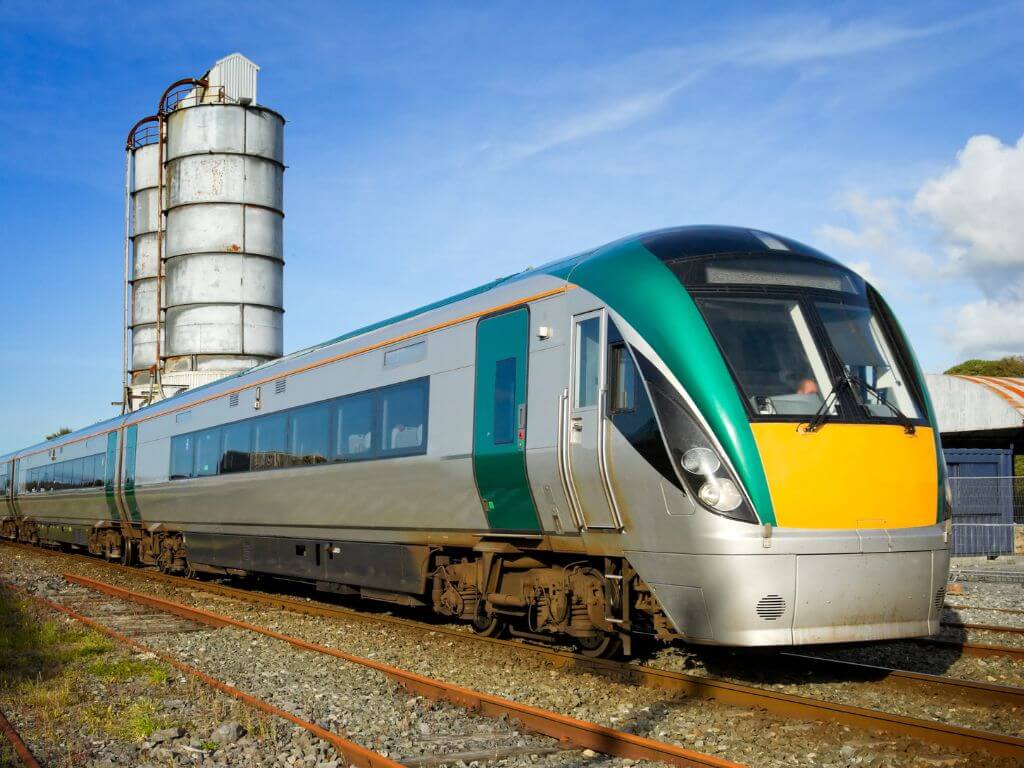
Ireland’s rail network connects many of the country’s major cities and is often the fastest and most comfortable way to travel between them. Trains run regularly between Dublin and cities such as Cork, Galway, Limerick, Waterford, and Belfast, making rail travel a convenient option for visitors planning a city-to-city itinerary.
Train journeys are generally reliable and comfortable, with spacious seating and onboard facilities on many routes. In some cases, the scenery along the way can also be quite beautiful, particularly as you travel through Ireland’s countryside.
However, the rail network is relatively limited compared with some other European countries. Many smaller towns and rural attractions are not directly served by trains, meaning you may need to combine rail travel with buses or local transport to reach your final destination.
Using Buses
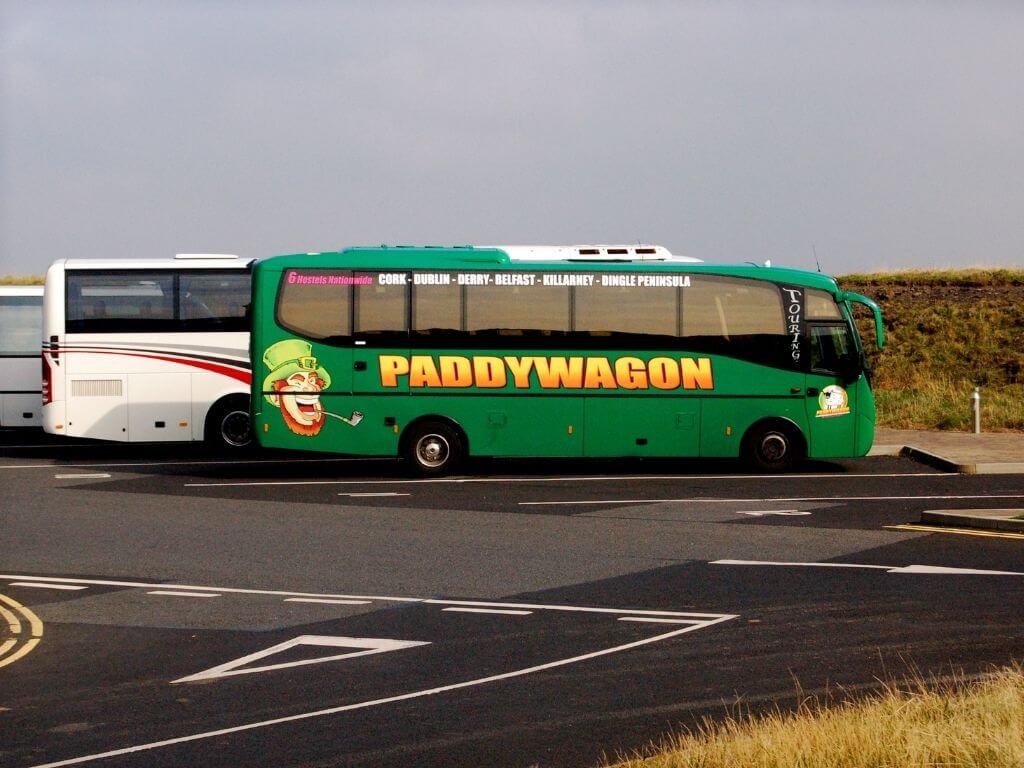
Ireland’s long-distance bus network fills many of the gaps left by the rail system and reaches far more towns and smaller destinations. Both national and private bus operators run routes throughout the country, making buses one of the most practical options for travelers without a car.
I’ve spent many journeys on the bus between Dublin and Tuam in County Galway when my family had a house there. And those bus journeys were perfectly fine.
Bus journeys tend to take longer than trains, but they can be a useful way to reach places that are not served by rail. Many routes connect smaller towns with nearby cities, allowing visitors to travel between different regions of the country.
For budget-conscious travelers, especially students as I once was, buses are often the most affordable way to get around Ireland, especially when tickets are booked in advance.
Guided Tours
Another option for travelers who prefer not to drive is joining organised day tours. These tours typically depart from major cities such as Dublin, Cork, Belfast or Galway and visit some of Ireland’s most famous attractions, including the Cliffs of Moher, the Giant’s Causeway, and the Ring of Kerry.
Guided tours can be a convenient way to reach scenic regions that are difficult to access using public transport. They also provide the benefit of local guides who share historical insights and stories along the way.
The trade-off is flexibility. Tours usually follow fixed schedules and routes, so you may not have as much freedom to explore at your own pace. However, for travelers who want a stress-free way to see Ireland’s highlights without driving, guided tours can be an excellent option, and you will come away with new friends and stories to share with family back home.
Public Transport in Irish Cities
While a car can be helpful for exploring rural parts of Ireland, you generally won’t need one when visiting Irish cities. In fact, driving in cities is often more hassle than it’s worth due to traffic, limited parking, and compact historic centres that are designed for walking rather than cars.
I never hire a car when just visiting Dublin. Although my family live in the suburbs, I usually get the bus or Luas into the city center and walk between attractions.
Cities such as Dublin, Galway, Cork, and Limerick are relatively easy to explore using a combination of public transport, walking, taxis, and cycling. Many major attractions are located close together, especially in historic city centers, which makes getting around surprisingly straightforward.
For most visitors, the best approach is to avoid renting a car until you leave the city. If you’re arriving in Ireland through Dublin Airport, for example, it’s usually easier to explore Dublin first using public transport and then collect a rental car when you’re ready to travel further around the country.
Below is a quick overview of how transport works in Ireland’s main cities.
Public Transport in Dublin
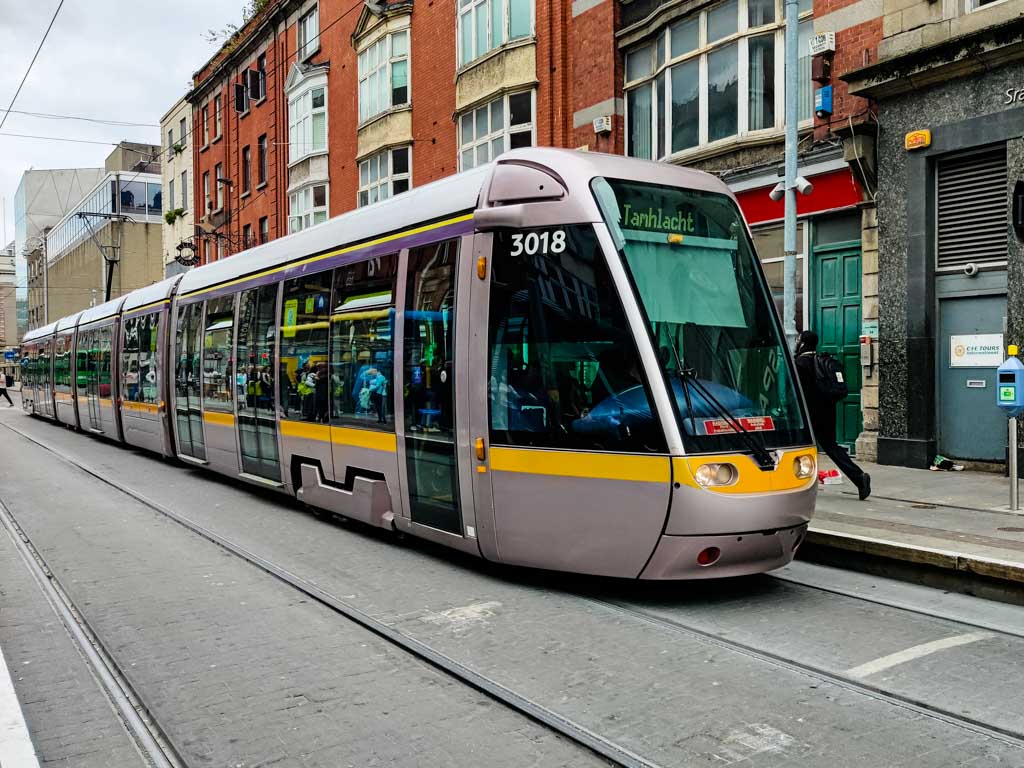
Dublin has the most extensive public transport system in Ireland. The city is served by buses, suburban trains known as the DART, commuter rail lines, and the LUAS tram system. Together, these options make it relatively easy to travel between different parts of the city without needing a car.
Dublin Bus operates routes throughout the city and suburbs, while the LUAS tram lines connect several key areas including the city centre, Docklands, and western suburbs. The DART runs along Dublin Bay and provides a convenient way to visit coastal areas such as Howth and Dún Laoghaire.
Most visitors find that Dublin’s main sights, including Trinity College, Dublin Castle, and the Guinness Storehouse, are either within walking distance of each other or easily accessible by public transport.
If you are planning to spend time in the capital, you can read my detailed guide to how to get around Dublin, which covers tickets, transport cards, and the best ways to navigate the city.
Walking and Cycling
Irish cities are generally compact and walkable, especially in historic centers where many of the main attractions are clustered together. In places like Galway and Cork, walking is often the easiest way to explore the city, as distances between sights are relatively short.
Dublin also offers several walking-friendly areas, particularly around the city center, Temple Bar, and the Georgian squares. Many visitors find that they spend much of their time simply walking between museums, restaurants, and historic landmarks.
Cycling is another option in some cities. Dublin has a public bike-sharing scheme and an increasing number of dedicated cycling lanes, making it possible to explore parts of the city by bike if you prefer a more active way of getting around.
Taxis and Ride Apps
Taxis are widely available in Irish cities and can be a convenient option for short journeys, particularly in the evening or when public transport is less frequent. You’ll find taxi ranks throughout city centres, and taxis can also be booked through mobile apps, such as FreeNow.
Ride-hailing apps such as Uber operate slightly differently in Ireland than in some other countries. In most cases, they connect you with licensed taxis rather than private drivers. You can learn about how Uber works by reading my Uber in Dublin article.
While taxis are more expensive than buses or trams, they can be helpful for reaching destinations that are not easily accessible by public transport or when traveling with luggage.
Should You Rent a Car in Ireland?
One of the most common questions visitors ask when planning a trip is whether they should rent a car in Ireland. The answer largely depends on where you plan to travel and how comfortable you are driving in a new country.
For many travelers, renting a car ends up being the best option because it allows far greater freedom to explore. Ireland’s most beautiful landscapes are often found far from major cities, and public transport doesn’t always reach smaller villages, coastal viewpoints, or remote attractions.
However, there are also situations where renting a car may not be necessary, or even particularly helpful.
When Renting a Car Is a Good Idea
Renting a car is usually the best choice if you plan to explore Ireland’s scenic regions and rural counties. Many of the country’s most famous driving routes, including large sections of the Wild Atlantic Way, are designed to be experienced by car.
Having your own vehicle makes it much easier to reach coastal viewpoints, national parks, historic ruins, and small villages that would otherwise require complicated transport connections.
A rental car can also be especially useful if you are visiting Ireland for a short trip and want to see as much as possible in a limited amount of time. Instead of relying on bus or train schedules, you can move between destinations at your own pace and adjust your itinerary along the way.
Road trips through places such as County Kerry, County Clare, County Donegal, or the Connemara region are some of the highlights of traveling in Ireland, and having a car allows you to explore these areas far more easily.
If you plan to rent a vehicle, my upcoming guide to car hire in Ireland explains costs, insurance, and tips for choosing the right vehicle.
When You Might Not Need a Car
On the other hand, there are situations where renting a car may not be necessary.
If your trip focuses mainly on Dublin, for example, a car can quickly become more of a burden than a convenience. The city center is compact and walkable, public transport is widely available, and parking can be both expensive and difficult to find.
Some travelers also prefer not to drive because they feel uncomfortable with driving on the left-hand side of the road, particularly on narrow rural lanes. While many visitors adapt quickly, it’s understandable if you would rather avoid the stress of learning new road rules while on holiday.
If you plan to rely heavily on guided tours from cities such as Dublin or Galway, renting a car may also be unnecessary. Many of Ireland’s most popular attractions can be visited through organised tours that handle the driving and logistics for you.
For many travelers, the best solution is a combination of transport methods. You might spend a few days exploring Dublin using public transport, then rent a car when you’re ready to travel through the countryside and see more of the island.
Alternatively, some may choose to base themselves in cities and explore these on foot, adding in day trips to venture out of the city and see more of the countryside. Both options work well.
Transport Tips for First-Time Visitors to Ireland
If this is your first trip to Ireland, understanding a few practical details about transport and travel times can make planning your itinerary much easier. Although Ireland looks relatively small on a map, traveling between destinations often takes longer than visitors expect, particularly once you leave the main motorways and enter rural areas.
Here are a few helpful tips to keep in mind when planning how you’ll get around Ireland.
Distances Can Be Deceptive
One of the most common mistakes visitors make is underestimating travel times. While distances between destinations may appear short on a map, journeys can take longer due to winding roads, slower speed limits, and scenic routes that naturally encourage you to stop along the way.
For example, a drive that looks like it should take two hours may easily stretch into three or four once you factor in narrow roads, traffic in towns, and the temptation to stop for photos at scenic viewpoints. When planning your itinerary, it’s a good idea to allow extra time between destinations so that travel days don’t feel rushed.
You can also come up behind slow-moving tractors or even animals on the roads in the countryside, so if your itinerary takes you on country roads, allow extra time for unexpected encounters!
Rural Roads Can Be Narrow
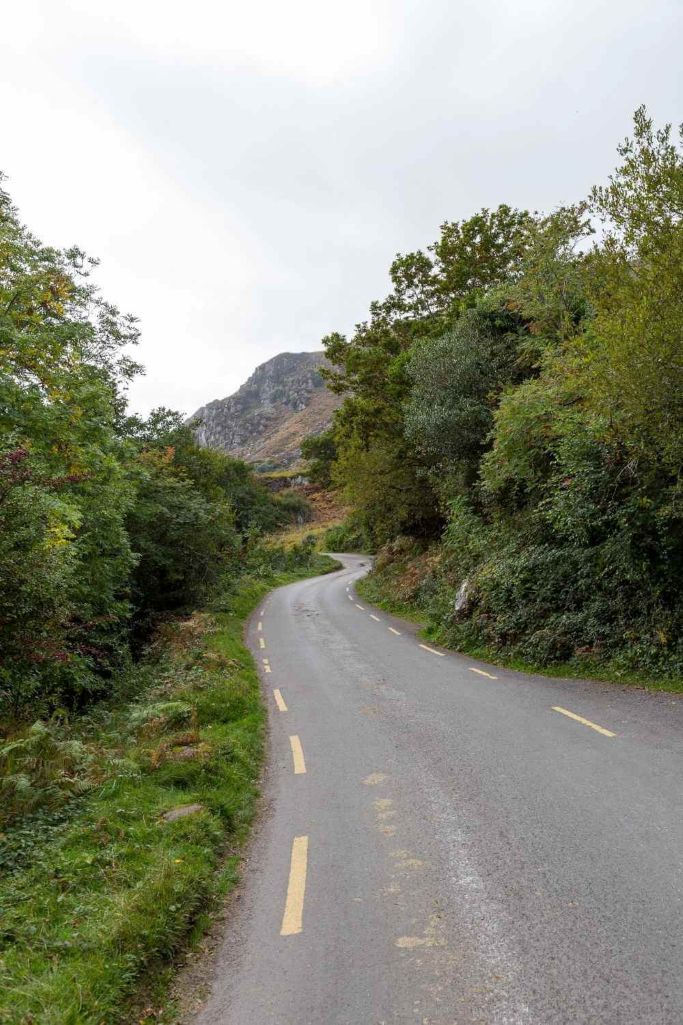
Once you move beyond Ireland’s motorways and major national roads, many rural routes become significantly narrower. In some areas, particularly along coastal routes or in mountainous regions, you may encounter single-lane roads with passing places where drivers need to pull over to allow oncoming traffic to pass.
This can feel unfamiliar at first, especially if you are used to wider roads. The key is simply to drive slowly, stay aware of your surroundings, and take your time. Most drivers in Ireland are accustomed to these conditions and are generally patient with visitors.
Parking in Cities Can Be Expensive
If you plan to spend time in cities such as Dublin, it’s worth remembering that parking can be limited and expensive, particularly in central areas. Many hotels charge additional fees for parking, and street parking is often restricted to short time periods.
For this reason, it is advisable to choose to explore cities using public transport and then collect a rental car when you are ready to travel to other parts of the country.
Some Scenic Areas Have Limited Public Transport
Ireland’s most spectacular landscapes are often found in remote coastal or rural areas, and public transport does not always reach these locations. Places such as scenic viewpoints, small peninsulas, and national parks may only be accessible by car or organised tour.
If your itinerary includes well-known routes such as the Wild Atlantic Way or visits to smaller villages and coastal drives, it’s worth checking transport options in advance. In many cases, renting a car provides the most practical way to reach these areas and explore them at your own pace.
How to Plan Your Route Around Ireland
Once you’ve decided how you plan to travel around the country, the next step is planning your route and itinerary. Ireland may be smaller compared to other countries, but there is a surprising amount to see, and the way you structure your trip can make a big difference to how much you enjoy it.
Most visitors begin their journey in Dublin, as the capital is home to Ireland’s main international airport and serves as the gateway to the rest of the country. Spending a few days exploring the city before traveling further afield is a common approach, especially since Dublin’s main attractions are easy to visit without a car. If you’re planning time in the capital, my detailed Dublin Travel Guide covers the best places to visit, where to stay, and how to make the most of your time there.
From Dublin, many travelers head west toward some of Ireland’s most famous landscapes. One of the most popular routes is the Wild Atlantic Way, a spectacular coastal driving route that stretches along the entire west coast of Ireland. This route passes through some of the country’s most dramatic scenery, including rugged cliffs, colorful seaside towns, and remote peninsulas. If a coastal road trip is on your list, you can explore highlights, regions, and planning tips in my complete Wild Atlantic Way guide.
Of course, not every trip to Ireland follows the same route. Some visitors prefer a slower pace that focuses on just one or two regions, while others want to see as much of the country as possible within a limited timeframe. Factors such as how many days you have, whether you plan to drive, and the time of year you visit will all influence the structure of your itinerary.
If you’re still working out the details of your trip, my Ireland Travel Planning guide explains how to organise your trip step by step, from choosing destinations to building a realistic route around the country.
With the right planning, getting around Ireland becomes much easier, allowing you to spend less time worrying about logistics and more time enjoying the landscapes, history, and culture that make the country so special.
How Long Does It Take to Travel Around Ireland by Car?
One of the biggest surprises for first-time visitors is that travel in Ireland often takes longer than it appears on a map. While distances between destinations may look short, roads can be winding, speed limits are lower on rural routes, and it’s almost impossible to resist stopping at scenic viewpoints along the way.
Motorways connect some of Ireland’s major cities and allow for relatively quick travel between them. However, once you leave these main routes and head into the countryside, journeys usually slow down. Narrow rural roads, small towns, and occasional traffic, such as tractors and farm animals on the roads, can all add extra time to a journey.
Because of this, it’s always a good idea to build extra time into your itinerary, particularly if you plan to explore scenic regions or coastal routes.
Here are some typical travel times between popular destinations to help give you a rough idea of how long journeys can take.
| Route | Approximate Driving Time |
| Dublin → Galway | 2.5 hours |
| Dublin → Cork | 3 hours |
| Dublin → Belfast | 2 hours |
| Dublin → Kilkenny | 1 hour 45 mins |
| Galway → Cliffs of Moher | 1.5 hours |
| Killarney → Dingle | 1 hour |
| Killarney → Ring of Kerry loop | Full day drive |
These are estimated direct driving times without long stops and are based on normal traffic conditions.

But many visitors spend longer on the road because there are so many scenic places worth pulling over for. Coastal drives, mountain passes, and small villages often become highlights of the journey itself.
Those few hours you think it’ll take you to drive the Ring of Kerry really is a full day. Trust me, I know. My husband and I did it on his motorbike during our honeymoon, and between stopping for pictures and refreshments, it took us an entire day. Oh, the memories!
When planning your route around Ireland, you need to try to balance sightseeing with travel time. Rather than attempting to see too much in a short period, focusing on one or two regions can often lead to a more relaxed and enjoyable trip.
We’ve done this on our last two visits to Ireland. Staying one week in a house in Wexford meant we could plan day trips with lots of extra time added in to allow for photo stops, lunches and detours.
Frequently Asked Questions About Getting Around Ireland
If you’re planning a trip to Ireland, you may still have a few questions about the best way to travel around the country. Below are answers to some of the most common questions visitors ask when deciding how to get around Ireland.
Final Thoughts on Getting Around Ireland
Deciding how to get around Ireland is an important part of planning your trip, but the good news is that there are several options to suit different travel styles. While renting a car remains the most popular choice for visitors, particularly for those who want to explore rural areas and scenic coastal routes, it’s far from the only way to experience the country.
Trains and long-distance buses connect many of Ireland’s major cities and towns, making it possible to travel between destinations without driving. Guided tours also provide a convenient way to visit some of the country’s most famous attractions if you prefer a more relaxed, structured experience.
For many travelers, the best approach is often a combination of transport methods. You might spend a few days exploring Dublin using public transport and walking, then rent a car to venture further into the countryside or along Ireland’s spectacular coastal routes.
Whichever option you choose, planning your transport early can make the rest of your trip much smoother. By understanding how transport in Ireland works and choosing the approach that best fits your itinerary, you’ll be able to focus on enjoying the landscapes, culture, and unforgettable experiences that make Ireland such a rewarding place to explore.
Pin for later!


*This post contains affiliate links, which may include Amazon affiliate links. To read more about affiliate links, please visit my Disclosure Policy page.